

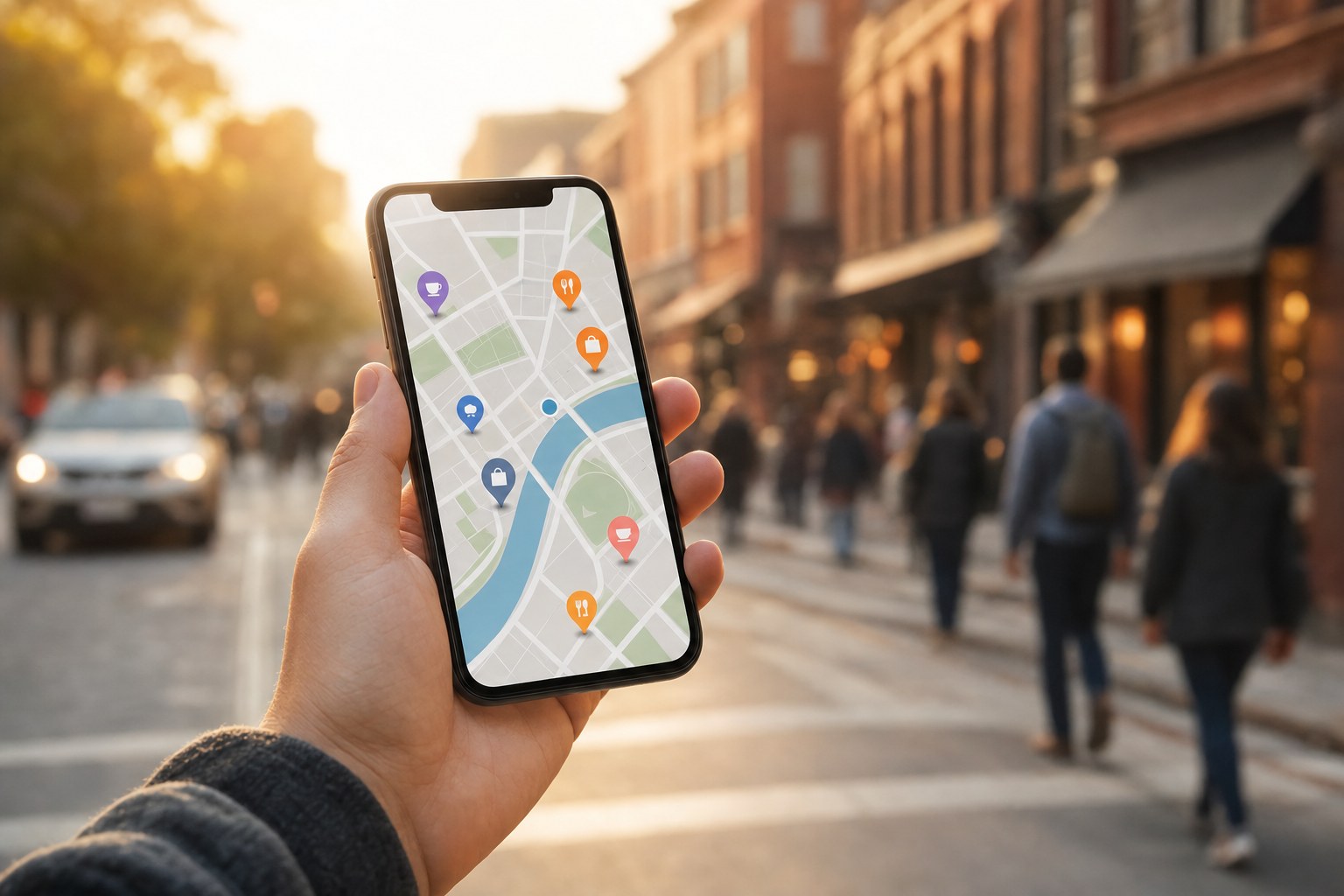
Local SEO for small businesses is one of the most effective ways to attract customers who are already looking for what you offer. When someone types “plumber near me” or “web designer in Louisville” into Google, local SEO is what determines whose business shows up first. If you’re not actively working on it, you’re likely giving those searches — and those customers — to someone else.
The good news is that you don’t need a big budget to see results. These foundational steps can significantly improve your visibility in local search results.
What Local SEO for Small Businesses Actually Means
Local SEO refers to the process of optimizing your online presence so your business appears in search results for location-based queries. This includes results in Google’s standard search listings, the local map pack (the group of three businesses that appears with a map at the top of local searches), and Google Business Profile pages.
Because local searchers are often ready to act — they want to call, visit, or book — ranking well in these results connects you directly with high-intent customers. That makes local SEO one of the highest-return activities for service businesses.
How It Differs From General SEO
General SEO focuses on ranking a website for topics or informational keywords. Local SEO specifically targets searches that include a location, or searches where Google infers that the user wants results nearby. For many small businesses, local SEO is the more valuable focus because your customers are local, not national.
Key Steps to Improve Your Local Search Visibility
1. Claim and Complete Your Google Business Profile
Your Google Business Profile is the single most important asset in local SEO. It’s what powers your appearance in the map pack and controls what customers see when they search your business name. If you haven’t claimed and fully completed your profile, that’s where to start.
A complete profile includes your business name, address, phone number, website, hours, category, and a description of your services. The Google Business Profile help center walks through each field and best practices for filling them in.
Additionally, adding photos, responding to reviews, and posting updates through your profile all signal to Google that your business is active and trustworthy.
2. Keep Your NAP Consistent Everywhere
NAP stands for Name, Address, and Phone number. Google cross-references your business information across many websites and directories — Yelp, Facebook, industry directories, and others. When your NAP is inconsistent across these sources, it creates confusion that can suppress your rankings.
Audit your listings and make sure every mention of your business uses the exact same name, address format, and phone number that appears on your website and Google Business Profile.
3. Optimize Your Website for Local Keywords
Your website needs to mention the locations you serve — not just assume Google will figure it out. Include your city or service area naturally in your homepage title tag, meta description, page headings, and body content. Service pages are especially important to optimize for location-specific searches.
For example, if you’re a web designer in Louisville, a headline that says “Custom Website Design for Louisville Small Businesses” is far more effective than one that says “Custom Website Design” alone.
4. Collect and Respond to Customer Reviews
Google uses reviews as a signal of both quality and activity. Businesses with more positive, recent reviews tend to rank higher in local results than businesses with few or outdated ones. Because of this, asking satisfied customers to leave a Google review is a direct and practical way to improve your local ranking.
Responding to reviews — both positive and negative — also shows Google and potential customers that you’re an engaged, active business.
5. Build Local Links and Citations
Links from other local websites — your chamber of commerce, local news sites, industry associations, or community organizations — carry real weight in local search. However, even getting listed in reputable local and industry directories counts as a citation that strengthens your local signals.
Start by identifying three to five directories or organizations in your area where your business could and should appear.
Your Website Still Matters in Local SEO
Many business owners focus entirely on their Google Business Profile and overlook their website. But your website is still a critical piece of the puzzle. Google evaluates your site’s speed, mobile-friendliness, content quality, and on-page SEO when deciding how to rank you — even in local results.
A slow, outdated, or hard-to-navigate website can hold back your local rankings even if your Business Profile is excellent. Both need to work together to get the best results.
Start Showing Up Where Your Customers Are Searching
Local SEO for small businesses doesn’t require a big marketing budget or technical expertise to get started. Focusing on the basics — a complete Business Profile, consistent information, location-specific content, and a fast, professional website — can make a real difference in how many local customers find you first.
At CW Dev Design, we build websites specifically designed to support local SEO from the ground up — fast, mobile-ready, and structured so Google can read and rank them effectively.
Want help improving your local search presence? Contact CW Dev Design to talk through your website and SEO goals. We work with small businesses to build sites that attract the right customers in the right places.